

What Is Sleep Apnea?
Do you have trouble sleeping? If so, you’re not alone. An estimated 22 million Americans suffer from a lack of sleep—and even exhaustion—caused by sleep apnea. Chronic snoring problems and interrupted sleep aren’t just an inconvenience. Untreated sleep apnea can lead to more serious health risks. Sleep apnea is a common but serious sleep disorder that causes interruptions in breathing during sleep.
When we sleep, the combination of gravity and our muscles relaxing allows the tongue and surrounding soft tissues to fall back into the throat obstructing airflow in the airway. This causes pauses in breathing. These pauses are called apneas.
The word apnea means without breath. A person may have partial pauses in breathing (hypopneas), or complete pauses (apneas) that last 10 seconds or longer during sleep. These pauses in breathing are often accompanied by a drop in blood oxygen level.
The struggle to breathe and the drop in oxygen saturation will eventually cause the person to momentarily arouse, opening the throat allowing them to breathe again. These arousals are brief and typically not remembered the next morning. Longer apneas may cause the sufferer to fully awaken to a frightening feeling of choking. This pattern can occur hundreds of times per night interrupting the body’s normal sleep cycle and preventing the deep, restorative sleep our bodies need.
Some of the short-term consequences of sleep apnea are excessive daytime sleepiness, lack of energy, poor concentration, irritability, slowed reflexes and an increased risk of accidents.
CBCT Scans for
Airway Imaging
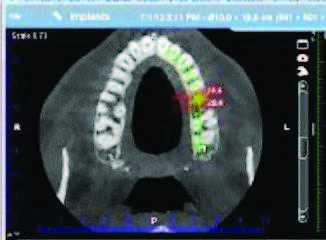
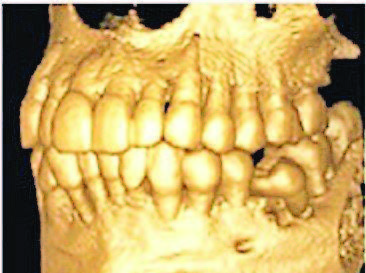
Cone Beam Tomography (CBCT) is a specialized type of x-ray that provides more information than conventional dental or facial x-rays. This computerized scan uses advanced technology to generate three-dimensional(3-D) images.
What are the benefits of a CBCT scan?
The benefits of a CBCT scan are that it:
- Provides 3-D images of dental structures, soft tissues, nerve paths, and bone, which are considerably more detailed than conventional two-dimensional dental x-rays.
- Allows for more precise diagnosis and treatment planning.
- Is simple and comfortable to take and can diagnostically image both bone and soft tissue simultaneously.
What are the common uses of a CBCT scan?
CBCT scans are commonly used to:
- Evaluate the position of teeth, bone structure, jaw joints, and the airway.
- Aid in:
- Accurate placement of implants
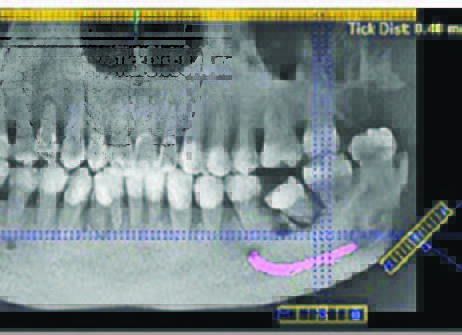
- Surgical planning for the removal of impacted wisdom teeth
- 3-D orthodontic evaluation
- Complex root canal diagnosis and treatment
What are the risks of a CBCT scan?
Although relatively low, CBCT scans cause some exposure to radiation; the amount of exposure is approximately the same as taking a five-hour international plane flight. Due to radiation exposure, scans are not generally recommended for pregnant women and should be used cautiously in the pre-orthodontic evaluation of children.
How does a CBCT scanning procedure work?
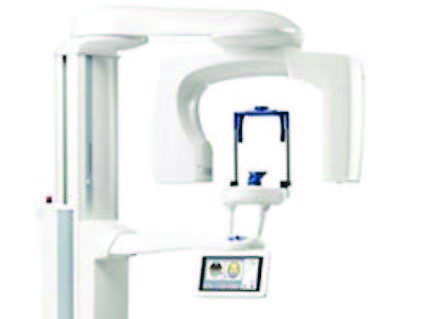
During the scan, a motorized arm rotates 360-degrees around your head while capturing multiple images from different angles that are then reconstructed to create a single 3-D image.
Who interprets the results of a CBCT scan?
The interpretation of a CBCT scan may be done by your dentist, dental specialist or radiologist.